

Bussing-in Political Power: When Home Becomes a Political Strategy
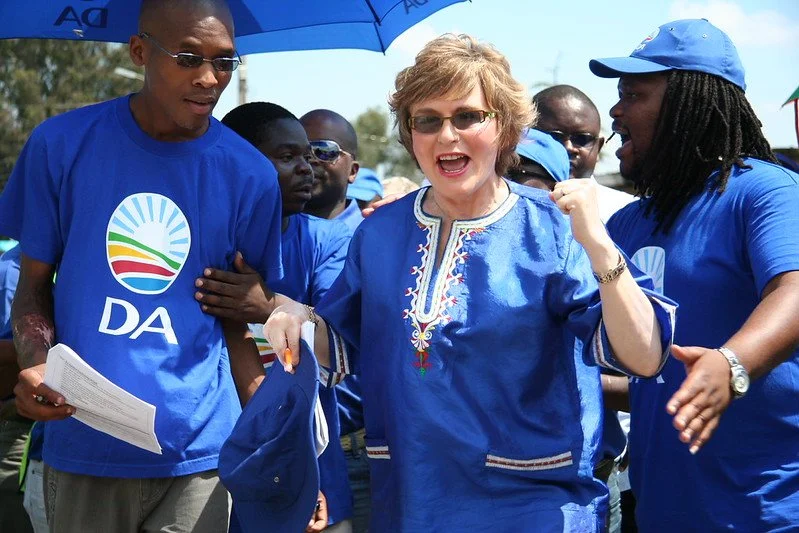
The controversy surrounding Helen Zille's candidacy for mayor of the City of Johannesburg in the 2026 local government elections has brought the electoral law concept of place of ordinary residence into renewed political focus.
Questions about Zille's Johannesburg residence were raised as early as June 2025 when she was considering the Johannesburg mayoral candidacy. At the time, she told Daily Maverick that her husband and family remained in Cape Town, while she contemplated living in Johannesburg if elected. The issue resurfaced in January 2026 as questions were raised about whether she had relocated to Johannesburg and has now acquired a more formal legal dimension. This followed the GOOD Party's request for legal advice on whether Zille's registration as a voter in Johannesburg complies with sections 7(3) and 8(3) of the Electoral Act 73 of 1998. GOOD has indicated that it may challenge her candidacy if advised that her registration does not comply with the Act. Its position is, in substance, that Zille's established residential and family ties remain in Cape Town, notwithstanding her political involvement and presence in Johannesburg. These assertions remain matters of political and legal contestation and have not been determined by the courts.
Yet the controversy raises a question much bigger than the candidacy of one politician: what does place of ordinary residence actually mean when political participation is at stake?
South Africa's Constitution, in section 19(3)(b), expressly provides that every adult citizen has the right to stand for public office and, if elected, to hold office; while section 19(2) guarantees every citizen the right to free, fair and regular elections. The right to stand for election is often overshadowed in legal and public discourse by the more frequently discussed right to vote. However, the Constitution draws no such distinction in importance because political participation encompasses both the right of citizens to choose their representatives through voting, and the right of candidates to seek election as representatives of voters.
The South African legislative framework also attaches political participation to geography. In terms of section 7(3) of the Electoral Act, a place of ordinary residence is a home or place where a person normally lives and regularly returns after a period of temporary absence. Section 8(3) reinforces this territorial connection by requiring a person's name to be entered on the voters' roll only for the voting district in which that person is ordinarily resident. The geographical basis of political participation is not limited to the right to vote. It extends to eligibility to stand for municipal office. Section 21(1)(a) of the Local Government: Municipal Structures Act 117 of 1998 provides that every citizen who is qualified to vote for a particular municipal council has the right to stand as a candidate in an election for that council, subject to the applicable disqualifications.
The significance of the requirement of place of ordinary residence in municipal elections cannot be overemphasized. Municipal government is territorially organized, particularly through wards. The person elected to represent a ward is expected to represent the people who live in that geographical community. In Kham v Electoral Commission, the Constitutional Court stressed the importance of accurately placing voters in the voting district in which they are ordinarily resident. The Court linked this requirement directly to the fairness of municipal elections and to the need to ensure that persons who are not entitled to vote in a particular area do not participate there.
“If we are rightly concerned when voters are moved across boundaries to influence an election, should we not also be concerned when candidates acquire an electoral home when it is politically strategic for them to do so?”
There is no gainsaying that the same logic applies to those who seek political office at the local-government level.
The question raised by the Zille controversy is therefore not whether a politician is permitted to move from one city to another. Of course, people are free to move. Indeed, South Africans have a constitutional right to freedom of movement and residence. The question is whether a person can treat residence as a strategic electoral instrument.
If a place of ordinary residence means little more than declaring a particular place to be one's home for electoral purposes, the territorial character of municipal representation becomes vulnerable. A person could potentially establish a nominal connection with an area because political circumstances make registration there advantageous. That raises the uncomfortable possibility that while South Africa worries about the "bussing-in" of voters, insufficient attention is paid to the possibility of the "bussing-in" of political power.
The distinction is important. Voters moving to urban centers because of economic necessity are exercising ordinary freedom of movement. Their mobility is a socio-economic reality that electoral law must accommodate. However, strategically manufacturing an electoral connection with an area raises a different question: whether the geographical relationship on which representation depends is genuine?
Could the concept of place of ordinary residence nevertheless accommodate the realities of political life, where a person may maintain enduring social, familial or political connections with more than one place? The question is illustrated by the controversy surrounding Thoko Didiza’s 2016 candidacy for mayor of the City of Tshwane, which raised questions about her local residence, and by President Cyril Ramaphosa’s continued registration and voting in Chiawelo, Soweto, an area with which he has long been associated, despite his other/subsequent residences elsewhere. These examples raise an important question: whether electoral law should regard place of ordinary residence as necessarily confined to a single geographically fixed place, or whether the concept can accommodate the complex and sometimes multiple territorial attachments that characterize contemporary political life. The problem may therefore lie partly in the law itself, partly in its enforcement and partly in a mismatch between the electoral system and contemporary patterns of residence.
That is why the present controversy deserves attention beyond the personalities involved. The legal question should not be: Is Helen Zille a Johannesburg resident?
The question at the center of the controversy is: What evidence should establish a place of ordinary residence for purposes of political participation, and how should the electoral system ensure that the standard applies equitably to every citizen and every political candidate? Accordingly, an electoral system should protect legitimate political mobility while ensuring that the territorial connection on which local representation is based is meaningful, consistently applied, and resistant to manipulation.
The Zille controversy therefore provides an opportunity to address the broader democratic question. If we are rightly concerned when voters are moved across boundaries to influence an election, should we not also be concerned when candidates acquire an electoral home when it is politically strategic for them to do so? South Africa must confront these questions head‑on, not because of Helen Zille, but because tomorrow another politician may well exploit the same weaknesses in the electoral system.