
Protection on Paper: The Failures of Egypt's Asylum Law No. 164/202
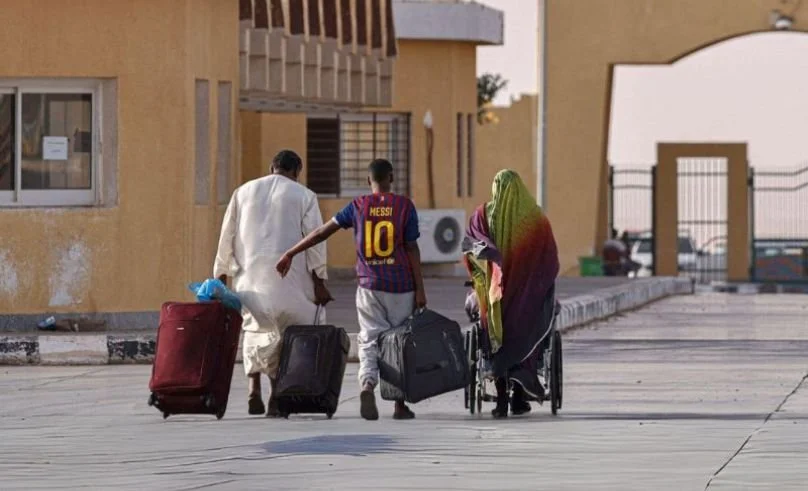
Credit: cairoscene.com
In December 2024, Egypt enacted its first national asylum legislation: Asylum Law No. 164/2024. Given that most asylum law across North Africa is derived from regional or international frameworks rather than domestic legislation, this development was significant.
However, the introduction of national asylum law is only valuable if it meets international standards, and Egypt's new law falls short in this regard.
Egypt's position as a host country is unique. It receives hundreds of thousands of those fleeing the ongoing civil war in Sudan and shares a critical land border with Gaza. How Egypt treats refugees and asylum seekers carries consequences that extend far beyond its borders. The law's passage has drawn widespread backlash from human rights organisations, UN experts, and civil society groups, and the crackdown that has unfolded since its enactment suggests their concerns are well-founded.
A Law Built Without Those It Governs
The law's credibility was undermined before it was ratified. It was drafted without meaningful consultation with the United Nations High Commissioner for Refugees (UNHCR), civil society, or affected communities. Under Articles 35 and 36 of the 1951 Refugee Convention, to which Egypt has been a party since 1981, states are required to cooperate with UNHCR and keep it informed of relevant legislation. This did not happen.
A draft was leaked in November 2024. The law was subsequently passed by parliament weeks later and was signed into force on 16 December 2024. UNHCR confirmed to Mada Masr, an independent Egyptian newspaper, that it had not seen the full text until after publication in the Official Gazette. Seven UN Special Rapporteurs wrote to the Egyptian government the following day, warning that the law “would fall significantly short of international human rights and refugee law and other relevant standards”.
The Non-Refoulement Gap
The principle that no one shall be returned to a country where they face a real risk of persecution or serious harm is the foundational obligation of international refugee law, enshrined in Article 33 of the UN Refugee Convention and reinforced by Egypt's obligations under the Convention Against Torture, the International Covenant on Civil and Political Rights (ICCPR), and the African Union Refugee Convention. The new law omits it entirely as a general protection.
“The omission of non-refoulement as a general principle, the restriction of core rights, and the criminalisation of humanitarian assistance each constitute violations of Egypt's treaty obligations.”
Article 13 of the national law prohibits only the extradition of recognised refugees to their country of origin or permanent residence. This leaves asylum seekers whose claims are pending and those at risk in third countries, without any domestic statutory protection against return. This creates a legal vacuum at a moment of greatest vulnerability in the process, where an individual has sought asylum but not yet been granted status.
Restrictions on Fundamental Rights
Beyond the non-refoulement gap, the law restricts rights that international law requires Egypt to protect. Article 4, which limits freedom of religious practice to adherents of Islam, Christianity, and Judaism, is in direct conflict with Article 18 of the ICCPR, which guarantees freedom of religion without distinction.
Article 20 guarantees access to education but limits it to the primary level, falling short of Article 22 of the Refugee Convention and Article 13 of the International Covenant on Economic, Social and Cultural Rights (ICESCR), which require education to be as favourable as possible and secondary education to be generally accessible. Egypt is also a party to the UNESCO Convention Against Discrimination in Education, which requires equal access for foreign nationals. The gap between primary provision and exclusion from secondary education consigns refugee children to a truncated educational path with lifelong consequences.
Article 30 allows for the revocation of refugee status on grounds of participation in political or trade union activities. A blanket prohibition of this kind violates Articles 19, 21, and 22 of the ICCPR, protecting freedom of expression, peaceful assembly, and association. As the Special Rapporteur on the human rights of migrants stated, a prohibition that does not clearly and narrowly specify its scope in line with international standards is contrary to international law. The chilling effect is especially acute for those who fled political persecution.
Criminalising Assistance
Article 37 introduces criminal liability for individuals who employ or accommodate asylum seekers without notifying local police, carrying penalties of at least six months' imprisonment and a fine. Given the documented pattern of arbitrary arrests and deportations, the requirement to report to authorities acts as a deterrent to the informal support networks, on which most asylum seekers rely for survival. Egypt has no formal refugee camps, and the barriers to formal employment (requiring a valid passport, legal entry, security clearance, and a work permit) make informal work and community-based accommodation the practical reality for most. Criminalising those who provide this assistance, without providing any alternative, strips asylum seekers of their last safety net.
From Flawed Law to Unfolding Crisis
The significance of the law's structural flaws becomes clearer when set against what has followed its enactment, and against Egypt's own official response to international scrutiny. In December 2025, the Egyptian government formally replied to the Special Rapporteurs' October 2025 communication, affirming full compliance with its treaty obligations and stating that no person is arrested for being a refugee, that those carrying valid UNHCR documentation are not deported, and that children are not detained in migrant holding facilities.
Within weeks of that response, Amnesty International documented an escalating crackdown in which refugees carrying valid UNHCR cards were detained and deported, children were among those arrested, and individuals reported signing "voluntary return" declarations under coercive conditions. The Egyptian Initiative for Personal Rights has reported estimates between 3,000 and 10,000 arrests in the first two months of 2026 alone. Four UN Special Rapporteurs issued a further statement of alarm in March 2026, noting that the 150% increase in refoulement incidents involving registered refugees documented between 2024 and 2025 had continued to worsen.
The legal significance of this sequence lies not in attributing bad faith to the government's formal response, but in what it demonstrates about the law's architecture. Where a domestic statute contains no general non-refoulement obligation, no maximum detention period, and no guaranteed appeal right for status revocation, international assurances cannot substitute for domestic legal protection. The gap between Egypt's formal commitments and the situation on the ground underscores why the implementing regulations that are still pending must engage substantively with the treaty obligations the law currently fails to reflect.
Conclusion
Egypt's Asylum Law No. 164/2024 was an historic opportunity to codify refugee protection in domestic law and align it with Egypt's substantial international obligations, but instead it is a missed opportunity. The omission of non-refoulement as a general principle, the restriction of core rights, and the criminalisation of humanitarian assistance each constitute violations of Egypt's treaty obligations. They also provide a legislative environment in which the crackdown now underway has proceeded with a veneer of legality. Reforming the law, its forthcoming executive regulations, and the enforcement practices that have accompanied it is required to ensure that the international commitments Egypt has made are respected.