
Subversion of Politics: Political Prohibitions on Refugees and Asylum Seekers in South Africa
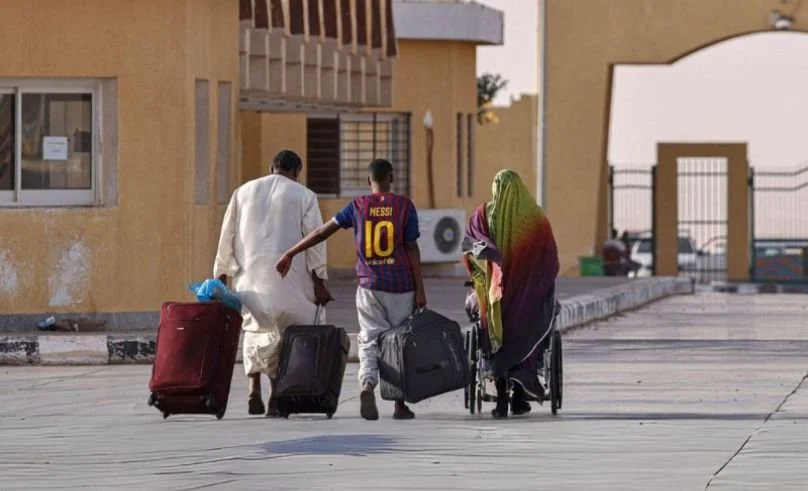
Credit: cairoscene.com
South Africa’s refugee system has undergone significant amendments over the last decade. Nestled in the amendments to the Refugees Act and the latest iteration of the accompanying Regulations is a prohibition on forms of political activity exercised by refugees and asylum seekers.
These prohibitions ostensibly work towards protecting national security, the integrity of the strained asylum system as well as South Africa’s relations with other states.
In attempting to do the above, South Africa has drafted, enacted, but not yet put into practice a collection of broad, vague and confusing provisions that generate more questions than answers and infringe on several constitutional and international rights. Yet, the political rights of refugees and asylum seekers remain uncertain and contested.
Despite the robust architecture of rights under international refugee law, the drafters of the 1951 UN Refugee Convention viewed the political agency of refugees with suspicion and did not encode a comprehensive catalogue of political rights. Instead, reliance is placed on a network of so-called ‘universally applicable’ international human rights and, where applicable, constitutional rights; rights to free assembly, association and opinion.
The suspicion towards the political agency of refugees and asylum seekers held by the state drafters of the 1951 Convention continues in the domestic refugee law of many countries. South Africa’s Refugees Act and accompanying Regulations are a recent example, which I explore in my article in the African Human Rights Law Journal.
Under this framework, political participation in both the country of origin and in South Africa has been restricted or completely prohibited. Voting in any election and engaging in ‘any political activity’ in relation to one’s country of origin, if done without the Minister’s approval, will trigger the cessation of one’s refugee status and warrant their treatment as an illegal foreigner under the Immigration Act.
Further, refugees and asylum seekers are prohibited from engaging in ‘any political activity in furtherance of any political interest’ in relation to South Africa. No definition is provided for these capacious terms, and no guidance is provided on how to acquire ministerial approval. The underlying assumption of tying electoral participation to the cessation of one’s status may be that if a refugee can vote in their home country, they do not deserve continued protection in South Africa. This may be true in some circumstances but is not convincing when applied as a blanket prohibition.
On the other hand, ‘political activity’ is wide enough to include vital avenues for agency and community such as organising, protest, lobbying and civil society engagement that refugees and asylum seekers – who do not have the right to vote in South Africa – depend on. Voting rights are already restricted to citizens by virtue of section 19 of the Constitution. Therefore, it must be asked what purpose these prohibitions will play in the shifting landscape of South Africa’s asylum system.
“To use the concern of subversion as a veil to enact vague prohibitions against political activity is not only reminiscent of bygone authoritarian rule but risks the fundamental protection of non-refoulement.”
The only available justification for this prohibition is telling, yet perhaps not definitive. In an SABC interview in 2020, then Minister of Home Affairs Aaron Motsoaledi invoked the prohibition on subversive activities under the OAU framework as the animating influence for these prohibitions. However, this does not provide sufficient clarity, and again raises more questions than answers. ‘Subversive activities’ is not a term of art, and not defined in the OAU Charter or OAU Refugee Convention. It is a term the emergence of which can be traced back to the choreography of anti- and eventually post-colonial governance in Africa, where concern over threats to newly established independent rule was ubiquitous.
Over time, however, as heightened concern over colonial subversives – at the time, most of whom came from apartheid South Africa – subsided, what remained was a refugee protection framework with a built-in security feature. Throughout this period, the charge of ‘subversive activities’ was often a subterfuge to stamp out any political dissent. The prohibition against subversion and its undercurrent of political repression, therefore, is anachronistic, resting uncomfortably in contemporary asylum policy. It continues to be vulnerable to broad and mercurial interpretation.
Where there is consensus, subversion describes any attempt to overthrow, undermine or destabilise a state or government. This may occur through open warfare or through covert operations, the latter being where the term’s ambiguity becomes most evident. It must be noted that the conduct falling under a minimalist or maximalist interpretation of subversion can be effectively proscribed by criminal law and sanction. To use the concern of subversion as a veil to enact vague prohibitions against political activity is not only reminiscent of bygone authoritarian rule but risks the fundamental protection of non-refoulement.
Elsewhere, across the continent, the concern over subversion continues to bear repressive fruit in the interaction between state and refugee. Zambia’s domestication of the prohibition against subversive activities threatens legitimate political acts conducted through press and radio. In Egypt, ‘undermining the constitutional system’ is a charge that has justified security forces’ crackdown on Sudanese refugees.
In the 2020 SABC interview, Motsoaledi acquiesced that the political prohibitions were potentially problematic and indicated that he would give instruction to amend them to better reflect their true intention; to domesticate the prohibition against subversive activities. This has not occurred at the time of writing and no mention was made in the recent 2024 White Paper that proposes a new and omnibus refugee, citizenship and immigration legislation.
In a country that not only values and relies on political contestation and protest, but also professes an allegiance to democracy, it should be questioned why South Africa may be willing to associate the political action of its predominantly African refugee population as potentially subversive. Further, serious questions remain as to the meaning and scope of these political prohibitions, whether they in fact end up domesticating the prohibition against subversive activities.