
Africa's Climate Advisory Opinion: Framing Rights Through a Decolonial Lens
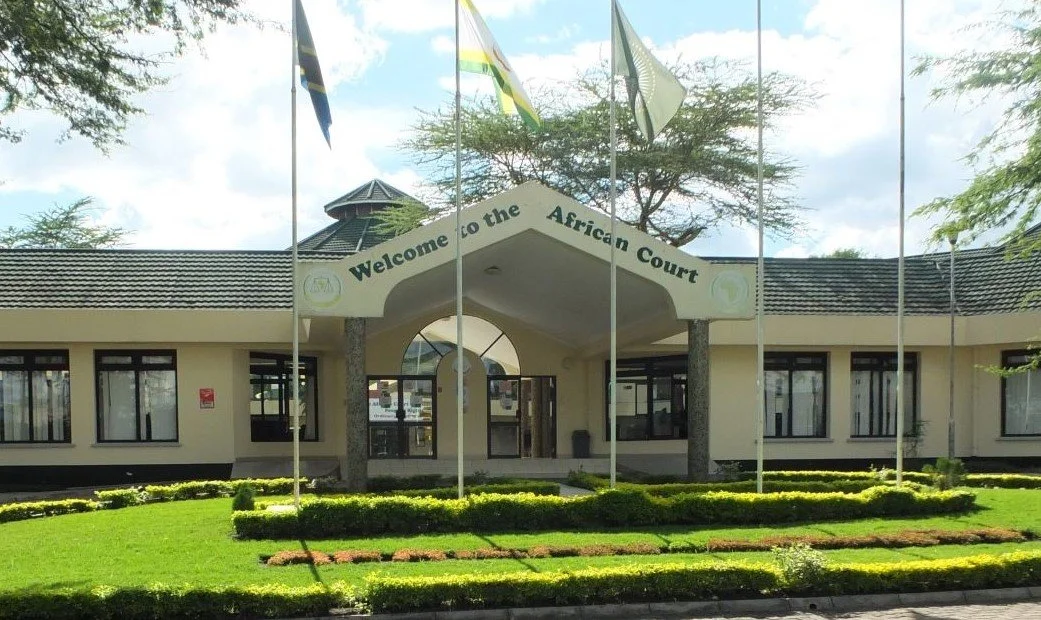
As the African Court on Human and Peoples' Rights considers the continent's first climate advisory opinion, it confronts a distinctive jurisprudential opportunity: to articulate climate obligations not through mitigation burdens, but through the protection of collective rights and the decolonisation of resource governance.
The Pan African Lawyers Union's petition to the African Court on Human and Peoples’ Rights (African Court), filed in May 2025 with amicus submissions open until 30 March 2026, arrives when three international courts have already issued climate opinions: the International Tribunal for the Law of the Sea (May 2024) on marine pollution from greenhouse gases, the International Court of Justice (July 2025) affirming binding mitigation obligations under the Paris Agreement, and the Inter-American Court of Human Rights (July 2025) on state duties to prevent environmental harms threatening human rights. Yet this request differs fundamentally. While those opinions centred on mitigation obligations, the African petition foregrounds adaptation, transitions, and participatory governance. This reflects the core asymmetry of climate injustice: Africa contributes less than 4 per cent of global emissions yet faces the most severe impacts, with 17 of the 20 most vulnerable nations worldwide on the continent.
The Distinctiveness of Article 24 and Peoples' Rights
Article 24 of the African Charter on Human and Peoples’ Rights (African Charter) guarantees all peoples the right to a general satisfactory environment favourable to their development. This provision stands apart from environmental rights provisions in other regional human rights instruments. Unlike individual rights frameworks, Article 24 constitutes a collective or peoples' right, embedding environmental protection within a broader architecture of collective self-determination and resource sovereignty. This distinction carries profound implications for climate jurisprudence.
In its landmark decision in Social and Economic Rights Action Centre (SERAC) and Centre for Economic and Social Rights (CESR) v. Nigeria, the African Commission on Human and Peoples’ Rights (African Commission) established that Article 24 imposes obligations to prevent pollution and ecological degradation, to promote conservation, and to secure an ecologically sustainable development and use of natural resources. Critically, the African Commission found that Nigeria's failure to regulate multinational oil corporations operating in Ogoniland violated not only environmental rights but also the Ogoni people's right to freely dispose of their wealth and natural resources under Article 21. In interpreting Article 21, the Commission explicitly traced the provision to the history of colonial exploitation and the continued vulnerability of African resources to foreign misappropriation. Read together, this linkage between environmental degradation, resource control, and historical dispossession provides the African Court with a foundation for approaching climate change through a lens attentive to structural and historical injustice.
The Charter's coupling of environmental rights with the right to development under Article 22 creates both potential tension and analytical richness. The petition explicitly asks the Court to clarify how states should balance development priorities with climate obligations, a question that implicates debates over just transitions and energy access.
Framing Obligations Through Adaptation and Participation
The petition's emphasis on adaptation reflects Africa's material reality. The continent requires USD 2.6 to 2.8 trillion by 2030 to implement climate commitments, yet currently receives only 3 per cent of global climate finance. Agricultural productivity has declined by 34 per cent since 1961 due to climate change, the steepest decline globally, resulting in annual economic losses of USD 7 to 15 billion.
Against this backdrop, the Pan African Lawyers Union's petition asks the African Court to delineate state obligations to protect vulnerable populations, including environmental human rights defenders and to facilitate a just, transparent, equitable, and accountable transition in the context of climate change. These questions reframe climate obligations not as technical mitigation targets, but as procedural and substantive duties owed to communities bearing disproportionate climate burdens. The request for guidance on state responsibilities regarding third parties, including international monopolies, multinational corporations, and non-state actors operating on the continent, extends SERAC's logic into the climate context, potentially establishing due diligence standards for corporate climate accountability.
Most provocatively, the petition seeks an interpretation of the decolonisation of natural resource governance frameworks in the context of climate change. This language directly challenges the global carbon market architecture and conservation schemes that reproduce extractive relationships between African states and external actors. The concern is not abstract. In 2025, the African Commission resolved to develop a General Comment on environmental rights, noting concerns about conservation schemes and the leasing of vast territories to foreign investors for carbon trading, often resulting in the dispossession of Indigenous peoples. The African Court is thus confronted with a critical question of whether contemporary climate governance mechanisms perpetuate colonial patterns of resource control.
What Hangs in the Balance
The African Court's eventual advisory opinion will shape climate litigation across the continent and influence domestic implementation of climate commitments by all 55 African Union member states. Unlike the International Court of Justice’s opinion, which addresses state responsibility in general terms, the African Court operates within a regional human rights system supported by monitoring mechanisms through the African Commission. The opinion could therefore provide a robust legal foundation for strategic litigation, invoking both individual rights (life, health, food) and collective rights (self-determination, resource sovereignty) against inadequate climate action.
The Court's interpretation of Article 24's relationship to Article 22 will prove particularly consequential. An overly permissive reading that subordinates environmental protection to development aspirations would undermine climate accountability. Conversely, overly rigid environmental conditionality could constrain legitimate development pathways for some of the world's least developed economies. The Court's challenge lies in articulating standards that protect both present communities from climate harms while safeguarding future generations from development paths that entrench vulnerability.
Georgetown Law's Human Rights Institute, granted amicus status alongside the UN Special Rapporteur on Climate Change, will submit briefs examining the impacts of climate change on African children and youth. This focus on intergenerational equity adds complexity to the people's rights framework, as future generations themselves constitute a “people” whose rights are protected under the Charter.
Ultimately, the advisory opinion represents more than doctrinal development. It offers the African Court an opportunity to assert that climate justice requires not simply emissions reductions by major polluters but also the structural transformation of the global systems that concentrate climate burdens on those who have contributed least to the crisis. Whether the Court seizes this opportunity, and with what jurisprudential tools, will define Africa's contribution to international climate law for decades to come.