
The reformulation of the international debt architecture and its implications for African countries
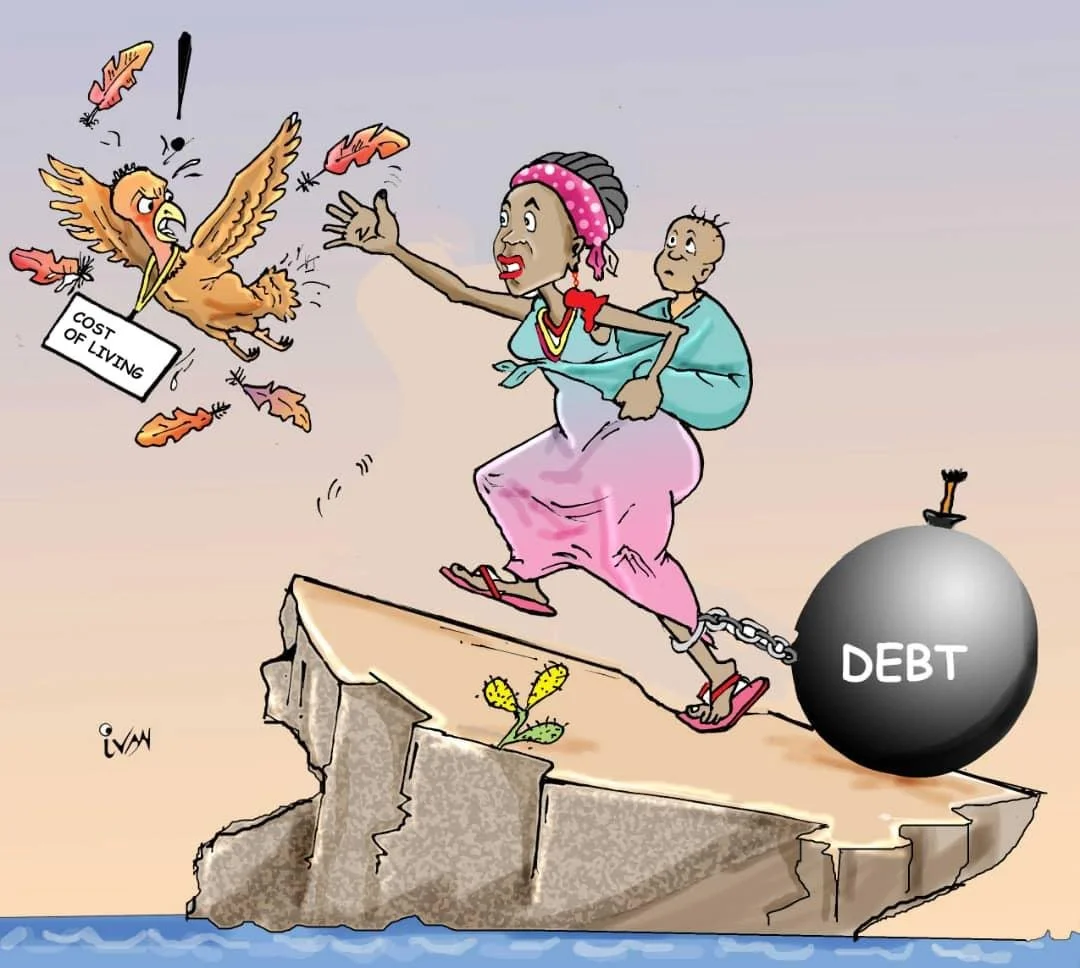
Picture Credit: https://afrodad.org/node/993
The global economy is navigating a complex poly-crisis characterised by high geopolitical tensions, climate change, and declining commodity prices. Arguably, this exposes how international and private law is poorly adopted to determine who bears the financial burdens that are the byproduct of these crises.
These factors are reshaping the behaviour of international financial institutions and undoubtedly exerting a significant influence on public debt. For too long, Africa has grappled with public debt management. As of 2025, Africa’s total debt stock was approximately USD 1.86 trillion. More recently, data indicates that a typical African government spends more than 12% of its revenues on interest payments signifying a diversion of the much-needed financial resources for development. This burden underscores a fundamental truth: the current international debt architecture is incompatible with African states’ obligations under human rights law, particularly the duty to realise socio-economic rights. Reform is not optional; it is urgent. As a rule maker, Africa needs to position itself strongly in terms of challenging the international debt architecture which is not working in its favour. This piece explores Africa’s position in reformulating the international debt architecture.
The Roots of Africa’s Debt Crises
Africa’s debt crises can be traced to an unfair global financial architecture rooted in inequality, colonialism, and the plunder of natural resources. These unfair practices warrant reform. Since the COVID-19 era, Africa’s debt stock has continued to rise, proving the inadequacy of global debt relief mechanisms. Although the Debt Service Suspension Initiative provided temporary debt relief to countries, It did not cancel debt obligations meaning countries were still required to pay their debts. While designed to involve new creditors (e.g., China), the G20 Common Framework has faced slow implementation in countries like Zambia and Chad. The framework is creditor-centric, slow, and insufficient to address Africa's profound debt vulnerabilities. The activation of USD 650 billion in Special Drawing Rights was meant to ensure countries had resources and are liquid, but access and distribution favoured rich countries. Special Drawing Rights are an international reserve assets (not a currency) created by the IMF to supplement the official reserves of its member countries. They are a potential claim on the freely usable currencies of IMF members such as the US dollar, Euro, Chinese Yuan, Japanese Yen and the British Pound. As such, SDRs can provide a country with liquidity. Despite being among the region’s most severely affected by the economic consequences of COVID-19, African countries collectively received only about US$32.2 billion, representing approximately 5–6.4% of the total SDR allocation.
Similarly, debt restructuring efforts have benefited only a handful of countries namely Argentina, Barbados, Grenada and Jamaica. The cases of Zambia and Ghana demonstrate that debt restructuring does not address the structural challenges of debt; rather, it only provides temporary relief. The restructuring process is characterised by the absence of clear procedures and timelines for debtors and creditors, and a lack of clarity on how different creditors will be treated. Additionally, debt restructuring often results in austerity.
In international markets, the ‘Africa premium’ phenomenon where African countries borrow at higher interests is clearly visible. This makes borrowing for Africa expensive due to credit rating downgrades intended to hedge against risks. Consequently, African countries are exposed to costly loans, risking defaults, heavy penalties, and ballooning debts. In terms of development, this means African countries will divert more resources towards debt repayments at the expense of funding development resulting in a contravention of the duty to cooperate in international human rights law. It is undeniable that debt has become a tool for profit generation through high interest rates, penalties for defaults, and management fees.
When it comes to debt sustainability analysis, assessments are skewed in favour of creditors. The current Debt Sustainability Analysis (DSA) often overlooks Africa’s colonial past and its impact on present economic structures, leading to limited domestic revenue mobilisation and reliance on external debt to bridge financing gaps.
Debt, Resources, and Human Rights
Despite its vast mineral resource endowments, resource-backed loans have not worked in favour of African countries due to international price volatility. Moreover, the extractive sector has been undermined by illicit financial flows, with around USD 89 billion leaving the continent annually. Cumulatively, this indicates that in the last decade (2015–2025), Africa has lost nearly USD 900 billion. This further compels countries to fall back on debt as a means of finance.
The huge debt overhang and its servicing obligations have significant implications for human rights. High debt levels affect human rights through mechanisms such as macroeconomic instability, political instability, higher interest rates, capital flight, reduced investment, higher inflation, lower demand, and lower productivity—all of which undermine economic growth. From a welfare economics perspective, this represents a net loss in societal well-being and a violation of the African Charter on Human and Peoples’ Rights (Articles 15–17, 21–22), and the UN Guiding Principles on Foreign Debt and Human Rights. Public investments in health, education, and sanitation yield high social returns and positive externalities, as a healthier, more educated populace boosts productivity and quality of life.
The Legal Dimension
It is important to understand that debt is contractual. These contracts sustain the unfair architecture. While African countries may possess legal knowledge, they often struggle with the complex technical nuances of international loan contracts. In many cases, creditors present draft loan agreements with intricate terms that are difficult to fully comprehend. Driven by desperation for finances, countries often sign these contracts to their detriment. At home, the situation is compounded by weak legal and institutional frameworks. In terms of debt disputes, several African countries have found themselves hauled into international arbitration proceedings which many critics argue disproportionately favour creditors and may impose significant financial liabilities on debtor states. In terms of scale, 106 known arbitration claims have been filed against African states since 1993 with Algeria, Egypt, and Libya being among the most frequent respondents. Between 2013 and 2018, there has been an unprecedented series of claims against African governments. During these last six years, they received more investor claims than the previous 20 years combined.
Africa’s Position and Pathways to Reform
“The African Union has acknowledged that public debt has impacted the continent’s development and that urgent interventions are needed to resolve the current debt crises. Existing reform efforts, especially from International Financial Institutions (IFIs), remain insufficient. They focus on debt relief and governance tweaks but fail to address structural imbalances that undermine Africa’s fiscal autonomy. To break free from the debt trap, Africa must champion bold reforms.”
In 1987, the African Common Position on External Debt was launched, calling for global financial reform. This was echoed in 2025 during the AUC Conference on Debt held in Togo—the first continental conference on debt since 1987. Held under the theme Africa’s Public Debt Management Agenda: Restoring and Safeguarding Debt Sustainability, the conference not only demonstrated political will but also provided practical solutions to ensure public debt and associated processes work in favour of African countries. Both meetings demonstrated political will and a widely shared position: the debt system must be restructured to serve development, not exploitation.
Key to note from the Lome conference is the need to reform the G20 Common Framework. This will ensure that it delivers adequate and timely debt relief and setting up a methodology for comparability of treatment. More so, enhancing transparency and accountability and inclusivity amongst stakeholders during debt restructuring is equally important. The conference also resolved to have stronger advocacy around debt forgiveness on a case-by-case basis, having a common strategy for debt negotiations and to harmonise regional macroeconomic policies to enhance resilience.
In a quest for favourable ratings, Africa is pushing for the establishment of an African Credit Rating Agency (ACRA) that can offer alternative assessments reflecting the continent’s realities. This would address biases and inaccuracies in existing international credit evaluations and mitigate the adverse effects of negative stereotypes and perception premiums, which have historically led to higher borrowing costs. This will contribute to African countries accessing concessionary loans with less stringent conditions.
A new global financial ecosystem that adopts a comprehensive debt sustainability framework and credit-rating assessment, bringing together all creditors—both official (international organisations, governments and government agencies including official monetary institutions) and private (these are neither governments nor public sector agencies. These include private bondholders, private banks, other private financial institutions)—in sovereign debt restructuring, is needed. Such a framework should promote responsible borrowing and lending practices, prevent over-indebtedness, and ensure sustainable debt management.
Using the law to hold governments or institutions accountable for public debt is important, but focusing only on outcomes is not enough. It is equally critical to examine the legal foundations that determine how debt is contracted, structured, and managed in the first place. These must be aligned to establish a solid legal basis for loan contracting. Key aspects include comprehensive definitions of public debt (including contingent liabilities), clear borrowing purposes, responsible lending, debt ceilings that safeguard economic stability, objectives of public debt management, public participation, transparency and accountability, environmental and social considerations, and debt servicing. Moving towards a legally binding mechanism for debt resolution, the African Union is calling for the establishment of UN Framework Convention on Sovereign debt to create more comprehensive, fair and effective multilateral mechanism for preventing and resolving sovereign debt crisis. To be specific, the framework responds to Africa’s debt challenges by enforcing compulsory private sector participation, binding standstill debt servicing during negotiations, establishment of clear legal obligations for full disclosure of loan contracts, and regulation of credit rating agencies.
Africa’s debt crisis is not merely a financial challenge; it is a developmental and human rights crisis. The current debt architecture entrenches inequality and undermines socio-economic rights. Reform must be rights-based, legally grounded, and politically driven. Africa’s position is clear: the continent demands a fairer global financial system that prioritises sustainable development over creditor profits.
To move from principle to practice, there is a need to advance a fair and transparent sovereign debt restructuring mechanism, anchored in international law and inclusive of all creditors. Secondly, governments must strengthen domestic legal and institutional frameworks for public debt management to enhance transparency, accountability, and parliamentary oversight. Thirdly, coordinated African advocacy should be intensified to influence global financial governance reforms, ensuring that development and human rights considerations are prioritised alongside financial stability.