
Consumer-focused Strategies Pertaining to Plastic Pollution Reduction in South Africa
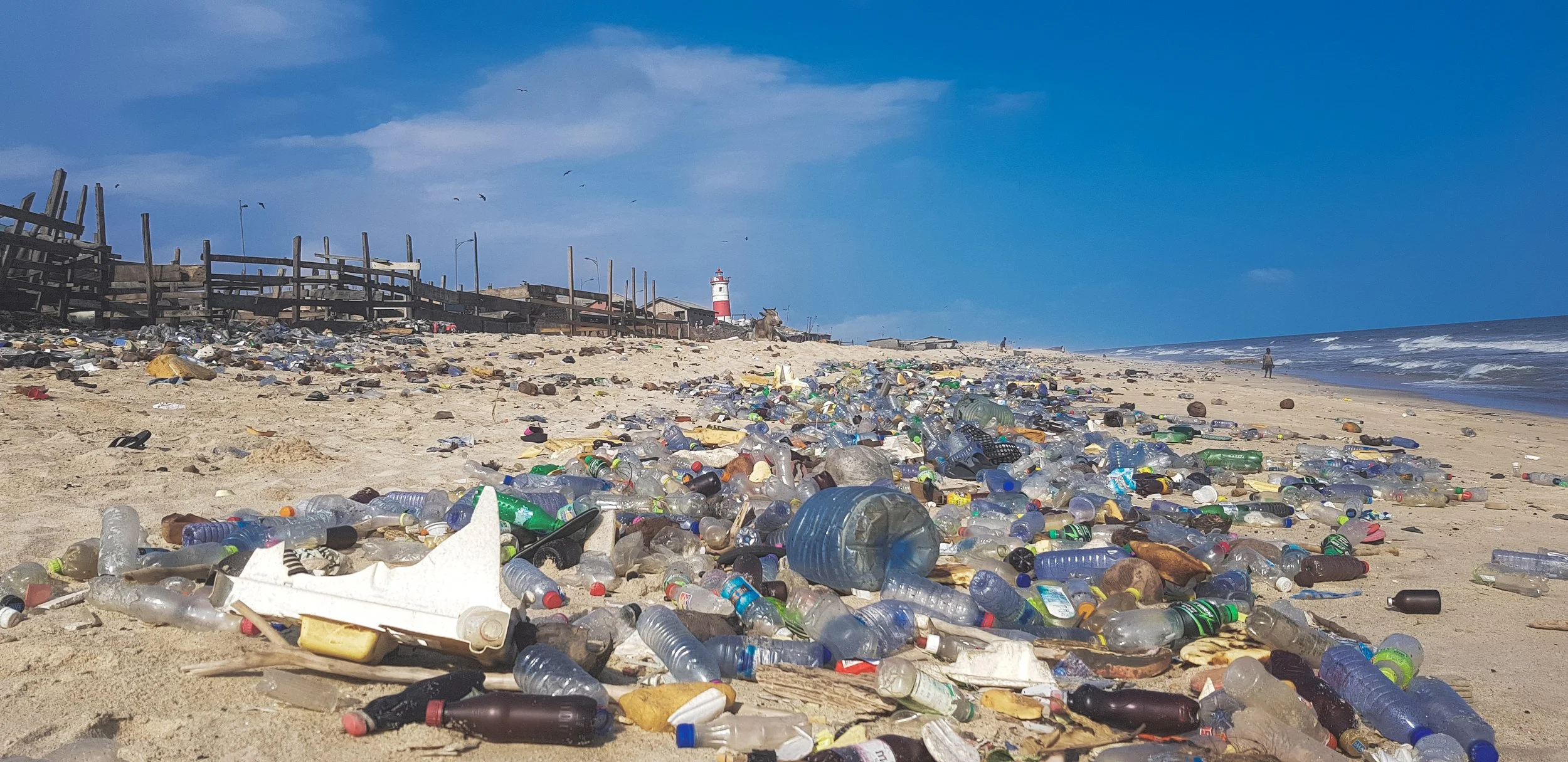
Picture credit: " Muntaka Chasant, licensed under CC BY-SA 4.0.
As negotiations toward a global plastics treatyresume under the auspices of the United Nations Environment Programme, and countries grapple with mounting plastic waste crises, the question of who bears responsibility for plastic pollution has become increasingly urgent.
South Africa, one of the continent’s largest plastic polluters, this debate is not merely theoretical but deeply practical: should the burden fall primarily on producers, consumers, or both?
This Blog examines the respective responsibilities of two key actors in the life cycle of plastic products, namely producers and consumers, in advancing responsible production and consumption. Sustainable Development Goal 12 (SDG 12) provides the international law framework within which South Africa’s legal response to plastic pollution is evaluated. The central question is: where does the responsibility to curb plastic pollution currently lie and where should it lie?
In answering this question, this Blog will provide an overview of selected legal and policy instruments aimed at enhancing producers’ responsibility, banning single-use plastics (SUPs) and promoting a reduce, re-use and recycle approach among both producers and consumers alike. The contribution concludes with recommendations on how to harness consumer-focused initiatives in the fight against plastic pollution.
International conceptualisation of responsible production and consumption
The deadline for achieving global sustainable development, as reflected by the seventeen United Nations Development Goals (SDGs), is rapidly approaching, with success rates varying greatly among the SDGs. While some SDGs such as SDG 3 (Health), SDG 4 (Education), SDG 5 (Gender equality), and SDG 9 (Access to energy) have shown notable improvement, others such as SDG 12 continue to lag.
SDG 12 seeks to ensure responsible production and consumption patterns and is operationalised through eleven targets and eight indicators. Of specific relevance for this submission is target 12.4, which calls for the substantial reduction of waste generation through prevention, reduction, recycling and re-use; and target 12.5, which emphasises the environmentally sound management of chemicals and all wastes, including plastics, throughout their life cycles.
“Awareness programmes that communicate the scientifically grounded environmental impact of plastic pollution appear to play a critical role in encouraging shifts away from SUP towards more sustainable alternatives.”
Achieving these targets including the SDG 12 target requires robust legal and policy frameworks that promote: (a) bans on single use plastics (SUPs) and extended producer responsibility (EPR); (b) a circular economy focusing on the reduce, re-use and recycle (RRR) principles; (c) material innovation; and (d) consumer action. Before delving into some of the instruments comprising the South African regulatory framework on plastic waste management, the country’s dire plastic pollution situation warrants attention.
The South African regulatory approach to curbing plastic pollution
South Africa is among the top three plastic polluters on the African continent, contributing approximately 2,389 tonnes of mismanaged plastic waste annually. Out of this total, 70% is collected, while 14% is recycled, and 28% is disposed of in sanitary landfills, with the remaining 28% disposed of in unsanitary landfills. Alarmingly, 30% is never collected and enters the natural environment.
While the above statistics do not seem to reflect any sort of effective regulation of plastic waste management, South Africa does have several laws, policies and initiatives aimed at managing the four different aspects of plastic production and consumption listed above. The National Environmental Management: Waste Act 59 of 2008 (NEMWA) extends producer responsibility across the full plastic lifecycle by encouraging waste management plans focused on reduction, recycling, and recovery. Although NEMWA points toward a possible ban on SUPs, no such measures have been implemented as yet.
Read alongside the NEMWA, the 2021 Extended Producer Responsibility Regulations mandate all role-players within the plastic value chain to participate in producer responsibility organisations or implement EPR schemes to facilitate waste collection, recycling and disposal. The SANS 695 (Compulsory Specification for Plastic Carrier Bags) of 2013 further regulate production by requiring that new plastic carrier bags contain 40–50% recycled material.
Lastly, at the policy level, the National Waste Management Strategy (2020) sets an ambitious target of achieving zero plastic waste in landfills by 2035, primarily through the promotion of a circular economy. While the above listed instruments provide a clear regulatory direction on the production side, a largely overlooked aspect is the role of the consumer and informal waste pickers.
Recommendations on consumer-focused plastic pollution reduction strategies
While the 2021 EPR regulations provide that informal waste collectors should be integrated into the post-consumer collection value chain of mandated producers’ EPR schemes, waste pickers lack legal recognition and are often structurally excluded from EPR and other plastic waste management schemes. This exclusion may be attributed to the perceived economic impact their formal recognition and protection might have on the formally registered EPR schemes.
Turning to the role of the consumer in curbing plastic pollution, the use of levies or taxes to influence consumer behaviour remains a popular regulatory tool, although its effectiveness is not always evident. The South African plastic bag levy introduced under the Revenue Laws Amendment Act 45 of 2003 sought to discourage excessive consumption and encourage the use of higher-quality (thicker) plastic bags. The levy was set at 32 South African cents, of which the consumer would shoulder 17 cents. However, there is little evidence to suggest that this intervention achieved a significant reduction in plastic bag usage nor that the introduction of thicker bags had any meaningful impact on consumption patterns.
By contrast, targeted consumer education initiatives have proven more effective in fostering behavioural change. Awareness programmes that communicate the scientifically grounded environmental impact of plastic pollution appear to play a critical role in encouraging shifts away from SUP towards more sustainable alternatives. Several examples from across the globe may be cited where strong consumer-driven initiatives resulted in strong plastic policy reactions. These include the plastic ban in Canada and the high plastic bag levies in Ireland.
Conclusion and recommendation
From the above overview of the current South African legal instruments pertaining to plastic pollution, the following conclusion may be reached. The drafters of these laws and policies should be commended for focusing on three of the four primary plastic pollution areas, namely: EPR, the creation of a circular economy through a reduce, re-use and recycle approach, and material innovation. These aspects receive considerable attention in most, if not all, of the instruments discussed, with the primary onus placed on plastic producers. However, the instruments fall short of facilitating an all-out ban on single-use (and other) plastic products and mandating strong consumer-centred initiatives as a driver for ending plastic pollution. The ultimate recommendation flowing from this piece is that existing laws and policies be extended to include a clear mandate for consumer-centred approaches to addressing the serious challenge of plastic pollution in South Africa so that responsibility is shared between producers and consumers.