
The realisation of socio-economic rights: An international obligation to maximise resources?
One of the most significant challenges with the realisation of socio-economic rights has been the caveat that these rights will be realised in accordance with the maximum of available resources. Arguably, the availability of resources for the realisation of socio-economic rights is decreasing.
Constrained fiscal space caused by increased sovereign debt, higher budget deficits and shocks to international markets makes it difficult for many African citizens to access affordable healthcare, free and accessible education, social protection and clean water amongst other critical socio-economic needs. Within this context, the relevance of the concept of progressive realisation, which is subject to the availability of resources, should be interrogated.
The concept of progressive realisation
The progressive realisation of socio-economic rights which is subject to the availability of resources was a concept that was introduced to provide states with adequate flexibility to realise these rights whilst having due regard to the prevailing economic circumstances in that country. The Committee on Economic, Social and Cultural Rights (CESCR) expounds on this concept in General Comment 3. The CESCR acknowledges that there may be resource constraints in a state, but this is not an adequate justification for a failure to realise the socio-economic rights of people unless a state can show that it has made every effort to use the resources within its disposal to realise these rights.
Nevertheless, this concept has been used as a defence in several court cases. One of these cases is Mitu-Bell Welfare Society v Kenya Airports Authority & 2 others, which dealt with the eviction of families and the right to housing. The respondents, i.e. government agencies, defended the eviction on the basis that socio-economic rights are to be realised progressively. The Supreme Court of Kenya made the following observation in response to the issue of availability of resources:
‘…Given the fact that our society is incredulously unequal, with the majority of the population condemned to grinding poverty, the right to accessible and adequate housing remains but a pipe-dream for many. What with each successive government erecting the defence of “lack of resources? …’
The question thus remains: how do we ensure that the realisation of socio-economic rights does not remain aspirational due to the caveat of progressive realisation? This post asserts that the answer lies in demanding that states maximise the resources available for the realisation of socio-economic rights.
Maximisation of resources: The role of taxation
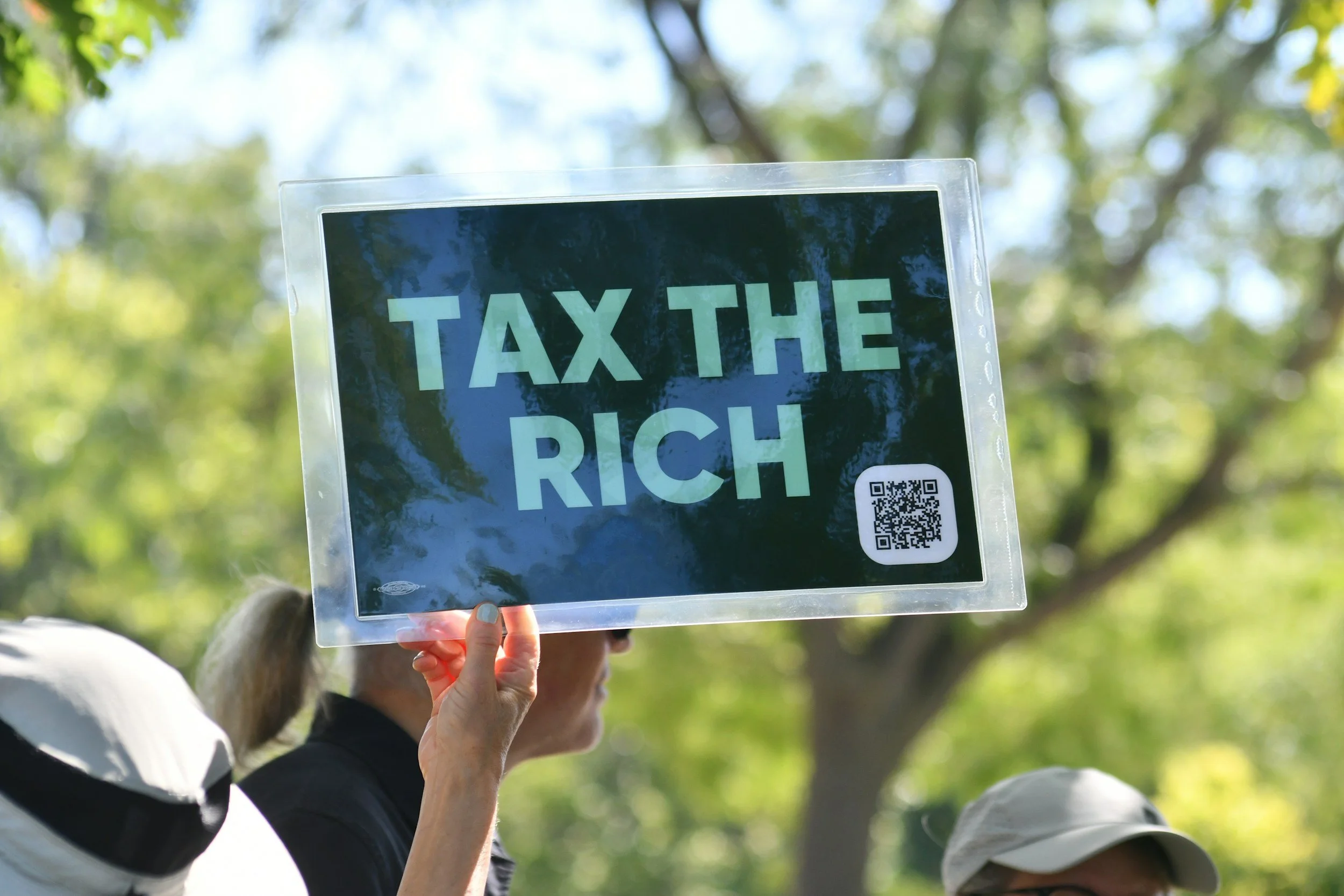
From a purely economic standpoint, it can be argued that taxes are not a prerequisite for public spending. This is in line with the modern money theory that upturns the idea that revenue raised mainly through taxation is what funds public services and leads to the realisation of socio-economic rights. However, from a legal perspective, government spending is dependent on the revenue that is available. This is embedded in the public finance management laws of many jurisdictions. Following this perspective, it can be argued that there should be an obligation to maximise resources to realise socio-economic rights.
“In short, the focus should be on increasing the size of the budget rather than only the share of the budget that is allocated to a particular socio-economic right. .”
Various legal instruments do not explicitly point this out including the African Charter on Human and People’s Rights. However, the Principles and Guidelines on the Implementation of Economic, Social and Cultural Rights in the African Charter on Human and Peoples’ Rights, provide that:
‘States need sufficient resources to progressively realise economic, social and cultural rights. There are a variety of means through which states may raise these resources, including taxation.’
While it is acknowledged that there are various ways of mobilising fiscal resources, tax seems to be key among them. For instance, in 2022, government contributions towards education financing amounted to roughly 75% of the total education financing. This is still not enough. The Education Finance Watch Report 2024 shows that despite many lower income countries reaching their intended budget targets, there is much more that needs to be done to ensure that access to education is guaranteed for a significant number of people within these countries. This calls for a shift from only focusing on the share of the budget and looking towards the size of the budget. While proponents of heterodox economics may disagree with this approach, at the very least, we can all agree that the macroeconomic ‘health’ of a state has a bearing on the fulfilment of socio-economic rights.
The UN Framework Convention on International Tax Cooperation
The capacity to raise revenue through taxation is an essential aspect of the national sovereignty of states and vital towards financing development. However, the global tax architecture severely constrains the ability of states to raise revenue through taxation. International tax rules as they are, favour countries that are the origin of investment more so than the countries that are the final destination of that investment. In other words, the international tax system allocates more taxing rights to capital-exporting jurisdictions more so, than capital-importing jurisdictions.
The vast majority of African countries are net capital importers which means that international taxation generally disfavours them. This is not surprising as these rules were developed at a time when most African countries did not have political independence. These rules were further cemented through an extensive network of bilateral tax treaties, which includes over 3000 such agreements. Post-independence, many African countries continued to engage in such unfavourable agreements in a bid to attract foreign investment and provide tax certainty.
Practically, this means that despite economic activities taking place in these countries and generating income, many African countries are unable to tax such cross-border activities effectively. Additionally, harmful tax practices perpetuated by multinational enterprises contribute towards the problem of eroding the tax bases of African countries. This has been acknowledged as a worldwide challenge, and several measures have been widely discussed to address this. However, these measures were done in non-inclusive spaces and failed to take into account the capacities, needs and priorities of African countries thus making them ineffective.
These gaps within the international tax system have led to dissatisfaction among African countries. As a result, in 2022, Nigeria on behalf of the Africa Group tabled UN General Assembly resolution 77/244 to promote inclusive and effective international tax cooperation. This resolution subsequently led to negotiations on the UN Framework Convention on International Tax Cooperation (UNFTIC). Notably, General Comment 3 alludes toward international cooperation, particularly, in mobilising resources for the realisation of socio-economic rights. At the time, this commentary implied ‘domestic’ resources and international aid. However, the realities of the global economic order have shifted significantly since then.
International cooperation in taxation is essential for ensuring the effective taxation of corporations and tackling revenue leakages caused by harmful tax practices. One of the key commitments within the UNFTIC is the ‘fair allocation of taxing rights’. The UNFTIC seeks to address the historic imbalance of taxing rights between Global North and South countries. It seeks to affirm the tax sovereignty, which has been eroded due to trade liberalisation and the resulting use of tax policy to attract foreign direct investment.
Conclusion
The realisation of socio-economic rights requires moving beyond the limitations of relying solely on the resources at the disposal of the state and instead considering the overall capacity of the state to mobilise resources. Taxation is one of the most essential and sustainable ways of mobilising resources and international cooperation is required to effectively carry this out.
The UNFTIC presents an opportunity to reshape the international tax architecture and promote the maximisation of resources through taxation. More than ever international cooperation is needed in not only in taxation but also in other economic areas such as sovereign debt and climate finance. The UNFTIC represents only one aspect of fixing the international financial architecture to promote the mobilisation of resources for the fulfilment of socio-economic rights. Much more needs to be done to level the playing field for Global South countries but this is a fair start.