
When Neutrality Silences Faith: Rethinking Kenya’s Rastafari Cannabis Judgment
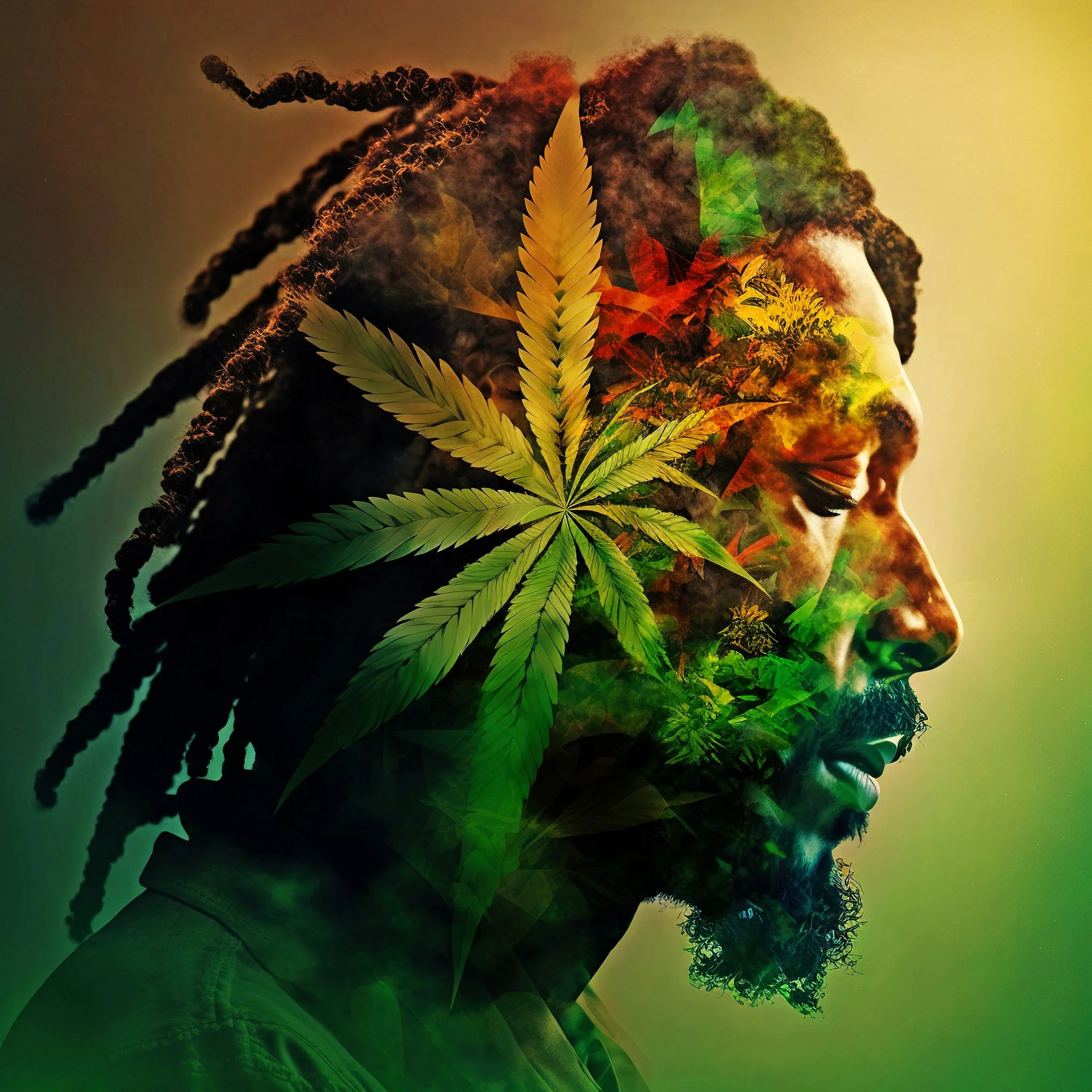
Picture Credit : Leo Reynolds, licensed under CC BY-NC-SA 2.0.
On 15 July 2026, the High Court of Kenya dismissed a petition seeking constitutional protection for the private, sacramental use of cannabis in Ras Tafari Society of Kenya (RSK) and Mwendwa Wambua alias Ras Prophet v Office of the Attorney General and Kenya Law Reform Commission, Constitutional Petition E175 of 2021.
The Court accepted that Rastafari is a religion protected by Article 32 of the Constitution but nevertheless held that the petition was premature because the petitioners had not exhausted statutory licensing mechanisms. It also concluded that cannabis was not shown to be essential to Rastafari worship and that any limitation of religious freedom was justified by public health and safety. The judgment is important because it places Rastafari belief within Kenya’s constitutional mainstream, building on the recognition of Rastafari in JWM (alias P) v Board of Management O High School. Yet its reasoning risks limiting religious freedom to practices that judges consider compulsory, uniform and administratively convenient.
A remedy that does not exist
The Court’s reliance on the exhaustion of statutory licensing mechanisms is difficult to sustain. It directed the petitioners towards sections 16 and 84 of the Narcotic Drugs and Psychotropic Substances (Control) Act. Section 16, however, primarily concerns licences for the importation, exportation, sale, manufacture, production and distribution of controlled substances. Section 11 separately criminalises smoking, inhaling or otherwise using such substances. The Act does not clearly establish a procedure through which a religious community may obtain an exemption for sacramental consumption. More fundamentally, an administrative board cannot declare legislation unconstitutional, issue a reading-in order or authoritatively determine the scope of Articles 27 and 32.
In Nicholus v Attorney General, the Supreme Court warned against applying exhaustion mechanically. Courts must consider the nature of the dispute and whether the alternative mechanism can provide an effective remedy. The existence of a statutory body is not enough. There is also a procedural contradiction. After holding that it lacked jurisdiction, the Court proceeded to determine the merits and dismissed the petition in its entirety. If the claim was premature, the more coherent course was to strike it out, stay it or remit the matter while preserving the petitioners’ right to return. A merits dismissal may prejudice any future challenge after the supposed administrative process has been attempted.
Religious freedom without theological gatekeeping
The Court acknowledged that the correct enquiry is not whether every adherent regards cannabis as indispensable, but whether it is a sincere and central manifestation of faith for those seeking protection. It then reached the opposite conclusion because some Rastafari do not consume cannabis and because worship can occur without it. That approach turns courts into theological arbiters. Religious communities are rarely uniform. A practice does not lose constitutional protection merely because some believers observe it differently or not at all. Article 32 protects each person’s right, individually or in community, publicly or privately, to manifest religion through worship, practice, teaching or observance.
The relevant questions should have been whether the belief was sincerely held, whether cannabis use had a sufficiently close religious connection for these claimants, and whether the law substantially burdened that manifestation. Sincerity would not have created an automatic exemption. Public health, harm and the rights of others remained relevant, but those considerations belonged in the Article 24 proportionality analysis. They should not have been used to narrow the meaning of protected religion at the threshold.
Neutrality is not equality
The judgment also treats uniform application as an answer to discrimination. Since the prohibition applies to everyone, the Court reasoned, it does not discriminate against Rastafari adherents. That is formal equality. Article 27 prohibits indirect as well as direct discrimination. A facially neutral cannabis prohibition does not burden a recreational user and a person who regards cannabis as a religious sacrament in the same way. The constitutional question was whether the State had reasonably accommodated a distinctive religious burden, not whether the statute expressly mentioned Rastafari. Kenyan jurisprudence already recognises accommodation as an element of religious equality. In Seventh Day Adventist Church v Minister for Education, the Court of Appeal required measures to accommodate students whose Sabbath observance conflicted with school programmes. Accommodation was not preferential treatment. It was necessary to make equal religious freedom meaningful.
“A practice does not lose constitutional protection merely because some believers observe it differently or not at all. ”
Proportionality requires more than generalised harm
Public health, child protection and prevention of diversion are legitimate objectives. The weakness lies in moving from these general interests to the conclusion that a narrow exemption is impossible. Article 24(3) places the burden of justification on the State. The State had to show why adult-only use in private homes or designated places of worship, subject to quantity limits, registration, non-commercial supply rules and protection of minors, could not adequately reduce the identified risks.
Instead, the judgment repeatedly faults the petitioners for failing to design a complete regulatory system and prove that an exemption would not be abused. That reverses the constitutional burden. Rights claimants may identify plausible alternatives, but they need not draft an entire regulatory code before the State is required to justify a blanket criminal prohibition.
The reasoning is also internally uneasy. For exhaustion, the Court considered licensing a suitable process capable of imposing safeguards and assessing individual applications. Under Article 24, however, it found that no workable less restrictive means had been demonstrated. The same regulatory possibility cannot readily be both an adequate alternative remedy and an unavailable constitutional alternative.
The Court too quickly distinguished South Africa’s 2018 Prince decision as a privacy case rather than a religious-exemption case. Yet the petitioners also invoked privacy and confined their claim to private worship and designated places of worship. Prince remained relevant because it showed that drug-control objectives do not automatically justify blanket criminalisation and that narrow interim relief can preserve safeguards pending legislation.
The decisive question was not whether cannabis is harmless, nor whether every Rastafari adherent uses it. It was whether the State proved that blanket criminalisation, without any process for religious accommodation, was the least restrictive means of protecting public health and safety. On the record described in the judgment, that burden was not convincingly discharged.