

Escaping The Net: South Africa’s Equality Act and the Unfinished Business of Private Discrimination
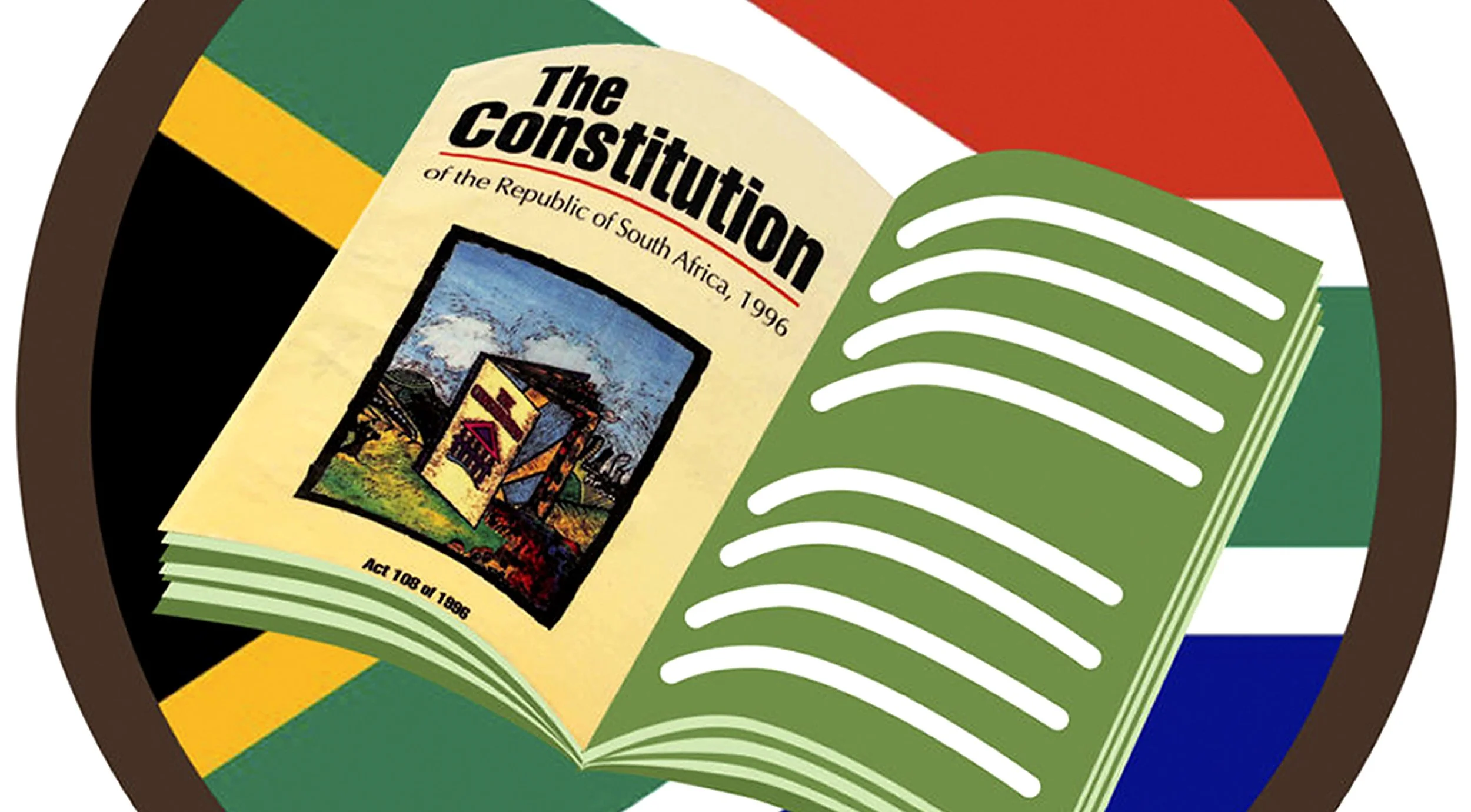
Pic Credit :civicsacademy.co.za/Wikipedia
Editor’s Note: This blog post is part of the Many Faces of Inequality series, featuring selected papers presented at SAIFAC's ‘Many Faces of Inequality’ Colloquium (4–5 August 2026).
South Africa remains marked by profound inequalities, entrenched and reproduced in private life as much as by the state.
The 1996 Constitution, in section 9(4), provides that no person may unfairly discriminate, and requires national legislation to give the guarantee substantive effect. That legislation is the Promotion of Equality and Prevention of Unfair Discrimination Act 4 of 2000 (Equality Act), which binds the state and all persons alike.
This post looks both backwards and forwards: backwards through the drafting history running from the Interim Constitution to the 1996 Constitution to the Equality Act to shed light on how the regulation of private discrimination was conceived and framed; and forward to what remains untapped.
Looking backwards
Section 9 and the Equality Act are responses to South African history: a reckoning with the fact that systemic discrimination was entrenched not only in the public sphere but also in the private spheres. During the constitutional drafting process of the early 1990s, private discrimination was a site of sustained contestation. The negotiations over section 8 of the Interim Constitution, the equality clause, left the horizontal reach of the anti-discrimination clause deliberately ambiguous and framed in the passive voice – “no person shall be unfairly discriminated against” – and did not explicitly specify whether the state along, or private persons too, bore the duty.
For the 1996 Constitution, the wording was expressly formulated in the active voice to eliminate any doubt that the duty applied to all persons as well as the state. The Panel of Constitutional Experts explained why:
“[o]ur history is not simply a history of discrimination by the state – it is a history of discrimination between citizens. The object of the subsection is not just to root out discrimination by the state but to attack it in its most pervasive form – discrimination as between citizens.”
That consensus was, however, later challenged by opposition political parties and industry lobby groups, who argued that binding private persons would infringe the rights to religious freedom and culture, and reach into intimate or personal decisions. These challenges were ultimately unsuccessful. Instead, the drafters addressed these concerns by including the qualifier “unfair”, so that only “unfair discrimination” is prohibited. This was to allow for balancing and justification in cases of competing rights, and to allow the courts to adjudicate these hard questions on a case-by-case basis.
“The drafting history thus instantiates a series of hard-fought choices about how far equality law should regulate the private sphere, leaving much of this to be resolved by the courts”
Section 9(4) of the 1996 Constitution also required national legislation, and similar contestations resumed during the draft process of the Equality Act between 1998 and 2000. This time, the question was never whether to regulate private actors but how. Initial drafts favoured regulating sector by sector, in line with comparative approaches elsewhere, to ensure that private actors do not escape the net of anti-discrimination law. That was abandoned as rushed, ad hoc and inconsistent, and an attenuated middle ground was struck: a universal duty on all persons not to discriminate unfairly; a universal defence under which discrimination may be shown to be justified and therefore fair. Chapter 5 envisages placing positive equality duties on companies and private entities, calibrated to their size, resources and influence, requiring positive, institutional steps rather than only negative and reactive duties not to discriminate unfairly. A schedule of illustrative sector-specific discriminatory practices covering insurance, pensions, housing and healthcare (among others) is included and is meant to be revised continuously. And section 34 empowers the Minister to add further grounds of discrimination.
Industry lobbied vigorously throughout in opposition to many of these proposals, animated by a desire to protect its own commercial interests and arguing that the legislation would impermissibly constrain fair discrimination. But the drafters held the line – the fairness enquiry in section 14 of the Equality Act allows discrimination to be justified in any event, and a presumption of unfairness is warranted. The lobbying left its mark nonetheless in section 14(2)(c), a provision that sits uncomfortably in the rest of section 14 but nonetheless sets out an exacting standard for industry to meet.
The drafting history thus instantiates a series of hard-fought choices about how far equality law should regulate the private sphere, leaving much of this to be resolved by the courts.
Looking forwards
Not enough of these mechanisms for regulating private inequalities have been used. Chapter 5, which envisages positive duties on certain private entities, has never been brought into force. The schedule of illustrative sector-specific discriminatory practices has not been updated once over twenty years, nor been litigated on. Section 34 has not been used either, and as the SARChI Equality Chair’s submission records, the Equality Review Committee has yet to make the required recommendation. The courts have taken up that work instead, recognising intersectional discrimination on race and gender in in Mahlangu, and poverty as a ground in Social Justice Coalition.
The uptake of the Act and of the Equality Courts it establishes has been disappointingly uneven, and even where the Act applies , it is often bypassed, with the section 14 balancing enquiry overlooked. Despite this patchy use, the Equality Act has not legislatively languished: it has been amended eight times since 2000, most recently to address the hate speech provision following Qwelane. Parliament returns to the Equality Act when a court requires it to. Notwithstanding this, Chapter 5, the schedule and section 34 have been left ignored, and an Amendment Bill published in March 2021 remains a draft.
What it would take
How can these mechanisms for regulating private inequalities be taken up? Section 14’s fairness enquiry, which allows for balancing and expressly envisages regulating private conduct, is already in force. It does not need proclamation or amendment, but often needs more careful argument and judicial reasoning. The schedule cannot move forward without an active Equality Review Committee. And bringing Chapter 5 into force requires only decisive political will.
The drafting archive records a deliberate decision to subject the private sphere to regulation, at risk of otherwise privatizing inequality. What remains is the question of the doctrinal, institutional and political conditions required to activate the Equality Act’s unrealised transformative promise.