

The Stilfontein Tragedy: A Grim Example of the Cost of Unfinished Business
Editor’s Note: In preparing this article, the author submitted questions to BGM regarding the issues discussed herein and received responses from the company. Where relevant, BGM’s responses have been reflected in this article.
A concoction of failures - a mine left to decay, a regulator asleep at its post, and a policing system that weaponises poverty - has culminated in tragedy. The deaths of 88 and the deliberate starvation and dehydration of more than 246 artisanal miners in 2024 at Buffelsfontein Gold Mine (BGM) in Stilfontein, North West were not an accident.
They were the foreseeable result of three intertwined failures: BGM’s abandonment of its closure and rehabilitation obligations; the Department of Mineral and Petroleum Resources’ (DMPR) failure to enforce compliance; and the South African Police Service’s (SAPS) unlawful use of starvation and dehydration to combat illegal mining. But for these failures, the events underground would not have occurred. This is not an anomaly; it is the predictable outcome of a systemic failure to hold companies accountable in South Africa.
Section 24 of the Constitution guarantees everyone the right to an environment not harmful to their health or wellbeing and obliges the state to protect that right through reasonable measures. Those measures exist: section 43 of the Mineral and Petroleum Resources Development Act 28 of 2002 (MPRDA) requires mining right holders to apply for a closure certificate once operations end. Section 24P of the National Environmental Management Act 107 of 1998 (NEMA) and the Financial Provisioning Regulations require that funds be set aside for rehabilitation.
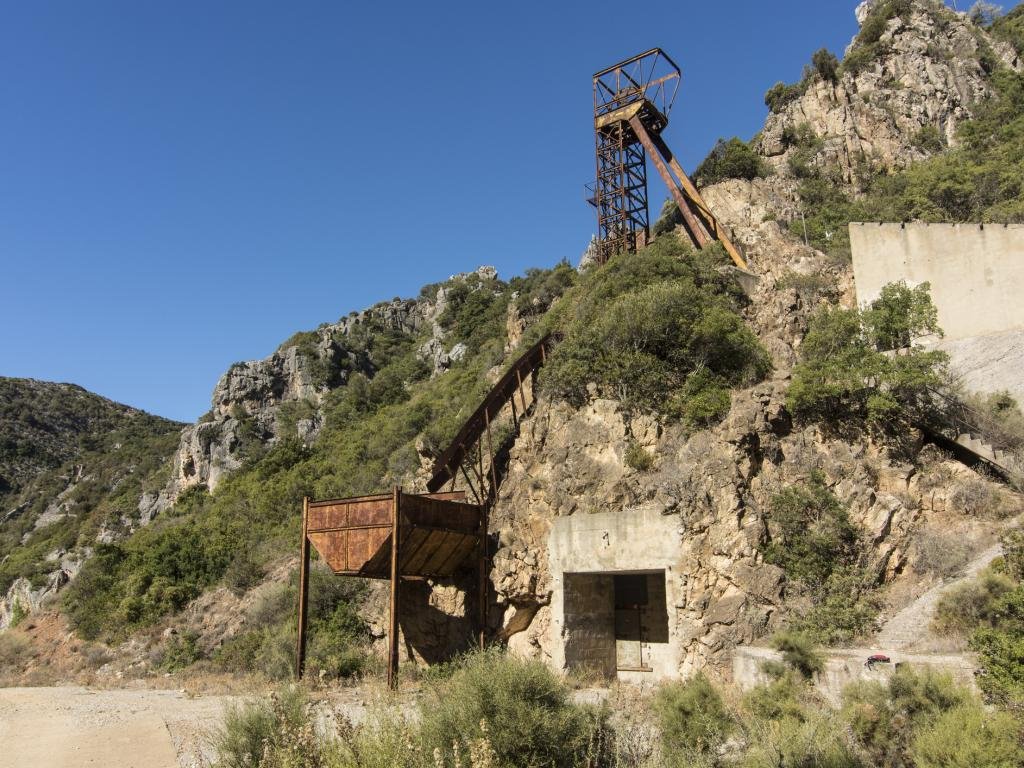
Notwithstanding the above, when BGM ceased operations in 2015, these obligations were not met. No closure certificate was issued, no meaningful rehabilitation was completed, and the mine remained unsecured. The DMPR, fully aware of these conditions, failed to act for nearly a decade. The site stood as a hollowed skeleton, its infrastructure decaying, its risks uncontained, and its environmental liabilities unresolved. In this vacuum, the law’s promise of protection became an illusion, and surrounding communities bore the consequences.
While BGM claims that substantial rehabilitation was undertaken, this is difficult to reconcile with the reality on the ground. The site remained visibly abandoned, unsecured, unfenced, and with no meaningful security presence. Whatever measures were taken fell far short of lawful closure. Partial rehabilitation does not discharge statutory obligations, particularly where access, underground risks, and environmental harm persist. The absence of a closure certificate nearly a decade later speaks for itself.
BGM has pointed to its long operational history, dating back to 1954, to contextualise its position. It is true that under the apartheid regime, mine closure obligations were rudimentary, focused largely on basic safety with little regard for environmental or social impacts. But that history cannot absolve present responsibility. The MPRDA and NEMA fundamentally transformed the legal framework, imposing clear and enforceable duties to plan, fund, and implement closure. Invoking a weaker past regime to justify non-compliance with current law misunderstands the very purpose of legal reform. South Africa’s post-apartheid framework was designed precisely to break from a system that disregarded mining-affected communities, replacing it with one grounded in constitutional rights, environmental protection, and accountability.
The consequences of improper mine closure are severe. Abandoned shafts become death traps. Open pits fill with water and claim lives, as in Ermelo, where Xolani Mthembu and Sifiso Yende drowned in an abandoned coal mine. Acid mine drainage contaminates water sources, poisons ecosystems, kills livestock, and destroys livelihoods. These are not hypothetical risks, they are the daily reality for mining affected communities in more than 6,000 of South Africa’s abandoned mines.
“If another Stilfontein is to be avoided, reform must be decisive.”
Stilfontein followed this familiar pattern. Following years of unemployment and economic neglect, community members were driven into BGM’s unsecured shafts in search of residual gold. By 2024, artisanal mining had become a means of survival. When police launched Operation Vala Umgodi, they laid siege to the shafts, cutting off food and water, tactics akin to those prohibited as war crimes and, under domestic law, amounting to cruel, inhumane, and degrading treatment resulted in catastrophic human cost. In Mining Affected Communities v MEC for Community Safety and Transport and Others, the court confirmed that authorities could not lawfully prevent the provision of food and water to those underground even though the court held that they did not have the obligation to make such provision.
BGM has since characterised its role as “assist[ing] in resolving the situation, to undertake the rescue activities and obtain funding for them”. That account omits the sequence of events. At the height of the crisis, the company denied responsibility and resisted funding intervention. The rescue was initially state-funded, with BGM only reimbursing costs after sustained public, and legal pressure. This was not proactive goodwill, it was a belated concession to accountability.
These deaths cannot be separated from the failure to close the mine in the first place. An abandoned, unsecured site created the conditions for artisanal mining. A properly closed and rehabilitated mine would not have been accessible. State inaction enabled both the unlawful abandonment and the crisis that followed.
BGM attributes delays in rehabilitation to funding constraints and disputes with the DMPR over the release of rehabilitation funds. However, if regulatory barriers genuinely prevented compliance, they could have been challenged through the courts. There is no evidence of sustained legal efforts to compel the release of funds. Instead, the mine remained in a prolonged state of partial closure, neither operational nor rehabilitated, leaving communities exposed.
The law is not ambiguous. Section 28 of NEMA requires those who cause environmental harm to prevent and repair it, and section 43 of the MPRDA prohibits closure without full rehabilitation. What is lacking is not law, but enforcement, allowing companies to walk away with impunity.
The scale of the crisis is staggering. As of 2025, there are approximately 6100 derelict and ownerless mines and 1,170 unsafe mine openings in South Africa, according to the DMRE. To illustrate the long-standing scale of the crisis, the DMRE’s own data from 2007 estimated that rehabilitating 6,000 abandoned mines would cost around R100 billion at the time, a figure that would be significantly higher today when adjusted for inflation. However, fewer than 1% have been rehabilitated. This is not a failure of law, but of enforcement.
The problem is compounded by corporate practices. Large mining houses sell depleted assets to undercapitalised entities, or place mines under indefinite “care and maintenance” to avoid triggering closure obligations. These practices, combined with weak enforcement, enable systematic evasion.
What emerges is a pattern of diffused responsibility, blame shifted between history, regulators, financial constraints, and corporate structure. But the principle remains simple: mining right holders are responsible for closure until those obligations are lawfully discharged. To accept otherwise is to entrench a system where liability is indefinitely deferred while harm accumulates.
Recent legislative reform offers little reassurance. The Draft Mineral Resources Development Bill, released in 2025, does little to strengthen closure requirements. It fails to mandate ongoing review, independent verification, or meaningful community participation, while leaving intact a system that allows companies to underestimate rehabilitation costs and exit liability prematurely. The result is again predictable: environmental degradation persists, and communities bear the cost.
If another Stilfontein is to be avoided, reform must be decisive. SAPS cannot be permitted to use starvation and/or dehydration as a policing tactic, artisanal mining must be formalised and regulated, closure obligations must be strictly enforced, financial provisioning must reflect real costs, parent companies must be held liable where subsidiaries fail to discharge their statutory obligations and “care and maintenance” must be tightly regulated. Without this shift, Stilfontein will not be the last tragedy. It will be the template.