

The Constitutional Right to Food in South Africa: What Lived Realities Reveal about Gaps in Law and Practice
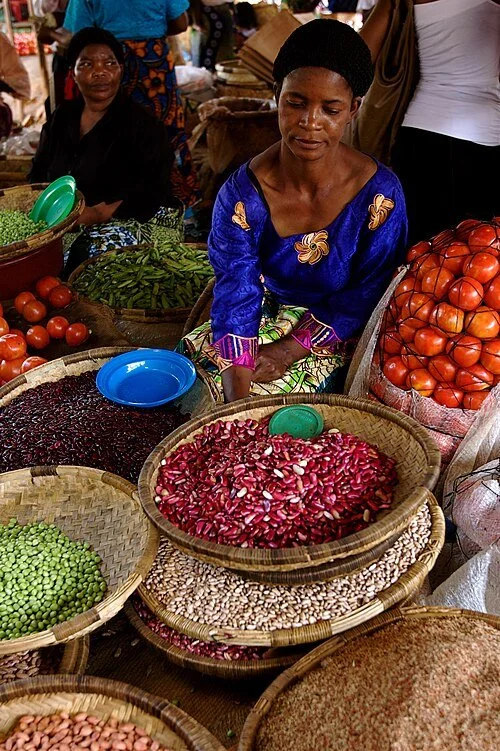
Picture Credit: Wikipedia.org
Despite a constitutionally enshrined right to sufficient food for adults (section 27(1)(b)), and an immediately realisable right to basic nutrition for children (section 28(1)(c)), statistics on food insecurity in South Africa and the lived realities of many paint a picture of a right deferred.
Annually, about 15,000 children are diagnosed with severe acute malnutrition, with around 1,000 dying directly from it. Around one-third of children under five years are stunted. Just over 1-in-5 households report inadequate or severely inadequate access to food. Yet, hunger and food insecurity need not exist as it is estimated that 10 million tonnes of food are wasted annually in South Africa – about one-third of all available food.
This disconnect between excess, wastage and need raises important questions about the realisation of the right to sufficient food and served as the impetus for the National Inquiry into the Food Systems of South Africa, conducted by the South African Human Rights Commission (SAHRC) between 12 and 20 March 2026.
The Socio-Economic Rights Institute of South Africa (SERI), together with six partner organisations representing society’s most vulnerable groups, submitted a written submission and was invited to make oral representations. Partners included the African Reclaimers Organisation (ARO), South African Informal Traders Forum (SAITF), Izwi Domestic Workers Alliance (Izwi), Commercial Stevedoring Agricultural and Allied Workers Union (CSAAWU), the Inner City Federation (ICF), and the Slovo Park Community Development Forum (SPCDF). Our submission drew on SERI’s food (in)security research report that documents how these partners are affected by, and have responded to, food insecurity. This blog distils some of the key arguments made about the structural and systemic causes of food insecurity, and recommendations for policy and practice.
Historic and Current Wage Injustice
An important enabler for realising the right to food is people’s purchasing power, which makes the national minimum wage crucial for low-income earners, such as farm workers and domestic workers. However, these wages are insufficient to cover the basic nutritional needs of households within the context of competing priority expenses such as transport and energy costs. Research illustrates that approximately 39% of domestic workers are paid below the national minimum wage level. The failure to ensure adequate wages and effective enforcement mechanisms undermines not only labour protections, but also the constitutional rights to dignity, equality, and sufficient food. The Department of Employment and Labour should monitor implementation and develop enforcement mechanisms. Furthermore, consideration should be given to a fair wage framework that requires wages that go beyond subsistence to enable workers and their families to meet their essential needs.
“The full realisation of the right to food requires a complex set of interventions spanning legal reform, strengthened enforcement, and improved coordination and accountability among duty-bearers”.
Corporate Capture of the Food System
Linked to food affordability is the impact of corporate power on the food system. The top five retailers in the country account for approximately 64% of the market. Much of this dominance results from the deregulation of the agricultural sector and government’s withdrawal from agricultural markets. The effects of deregulation on food prices were visible during the COVID-19 pandemic where a lack of regulation of food retailers enabled them to hike food prices at a time when consumers were particularly vulnerable. These dynamics raise important questions about the state’s obligation to regulate private actors whose market dominance undermines equitable access to food. To ameliorate high food prices government and large retailers should implement the ten budget-friendly food items initiative that presents a double-discount on a selection of food items that are protein-rich.
The Importance of Land Reform and Land-Based Livelihood Strategies
Government’s own assessments illustrate the lack of transformation in land ownership – for example, 72% of agricultural holdings by individual owner are held by white males. The persistence of unequal land ownership also highlights the unfinished constitutional project of land reform and equitable access to productive resources. In addition, most of the productive land in South Africa is held by approximately 40,000 commercial farmers that produce most of South Africa’s food, contrasted with the approximately 2.5 million smallholder farmers that often struggle with access to land, water and entry to markets. Land-based livelihood strategies like food gardens, subsistence farming, and smallholder farming help to alleviate food insecurity to some degree. The Department of Agriculture as well as municipal planning and economic development departments should redouble efforts to redistribute urban and rural land to support those who might want to engage in agricultural production or food gardens.
The Indivisibility of Rights
The lived experiences of informal traders, domestic workers, and farm workers illustrate the indivisibility and interdependence of constitutional rights. Informal trade is an important livelihood strategy for many. Informal traders play a central role in food security by often selling food at cheaper prices than formal retailers and enabling low-income customers to buy in smaller quantities, contributing to food safety in the absence of electricity and refrigeration. Yet, traders are often harassed by municipal and law enforcement officials, have their goods confiscated, and their rights to make a living violated without due process, leaving many without an ability to eke out a meagre living. Clear guidelines published by the South African Local Government Association prescribe how local government should regulate and support informal trade at the local government level. These should be implemented, and the role of informal traders in urban food systems recognised.
A clear link between the right to food and workers’ employment rights is illustrated by the lived experiences of farm workers and domestic workers. This is particularly the case when employees who live on the properties of their employers face limitations around the storage, preparation and growing of their own food. The Department of Employment and Labour should monitor the working conditions of those in precarious work, such as domestic workers and farm workers.
The link between the right to food and social protection is set out in article 25(1) of the Universal Declaration of Human Rights. When accessed, social grants can provide a useful means for many vulnerable and low-income people to stave off extreme levels of hunger. However, due to the insufficiency of the amounts, a universal basic income guarantee should be introduced to better address the problem.
Policy and Legislative Gaps
South Africa has yet to ratify the Optional Protocol to the International Covenant on Economic Social and Cultural Rights that serves as a complaints and investigative mechanism for rights violations. Such ratification could provide an additional accountability mechanism for citizens to hold the state accountable for the realisation of the right to food.
The absence of a comprehensive legislative framework on the right to food contributes to fragmented governance, weak accountability, and inconsistent implementation across different spheres of government. National framework legislation on to the right to food (e.g. a Food and Nutrition Security Act) in line with the recommendations under General Comment 12 on the Right to Adequate Food would set out the roles and responsibilities of the different actors in relation to food security in South Africa, including an inter-departmental body with oversight responsibility.
Finally, South Africa’s 2024-2029 National Food and Nutrition Security Plan is two years overdue, and its finalisation should be expedited.
The full realisation of the right to food requires a complex set of interventions spanning legal reform, strengthened enforcement, and improved coordination and accountability among duty-bearers. Moreover, it requires a shift in perspective away from the normalisation of hunger and food insecurity.
